Case Study: Online Payment Report
Improving trust, clarity, and reconciliation workflows for Buildertrend Payments.
Role: Product Design Lead
Teams: Product, Engineering, Risk
Scope: Research → UX Strategy → Prototyping → Testing → Delivery
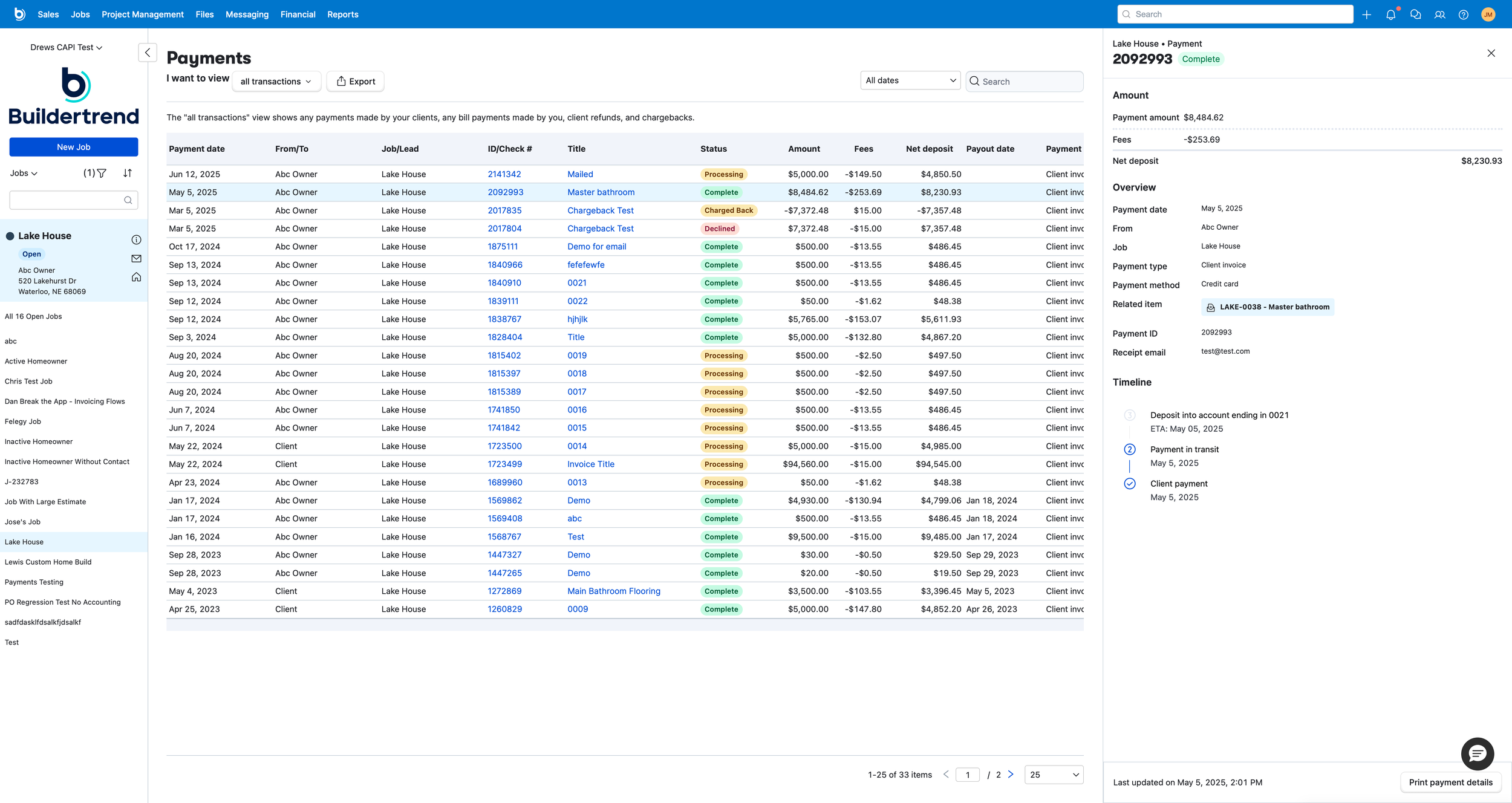
Online Payment Report
Context & Problem
Buildertrend Payments is a major revenue initiative, and the Online Payment Report is the primary view builders use to understand all financial activity — client payments, refunds, chargebacks, and settlement deposits.
Before redesign:
Builders didn’t trust the financial data
Filters were confusing
Refunds & chargebacks weren’t visible
Statuses lacked meaning
Reconciliation was slow and error-prone
This directly impacted revenue adoption for Buildertrend Payments.
My Role
As Product Design Lead, I owned:
25+ user interviews
Support ticket analysis
Competitive analysis
Workshops with PM + Risk
UX strategy & flows
Wireframes, prototypes, usability testing
Design system enhancements
Guiding designers in financial services
Discovery & Insights
Insight 1: Builders needed to understand why payments were denied.
Insight 2: Users didn’t know when they’d receive settlement funds.
Insight 3: Filters were complex and often forgotten.
Insight 4: Chargeback details were missing.
Challenges & Constraints
Technical
Legacy payment-status logic
Data from multiple systems (out of sync)
Chargeback reasons not in UI
QuickBooks sync dependencies
Design-System
Table component not built for financial workflows
No side-panel pattern
Inconsistent status tag system
Needed net-new filtering model
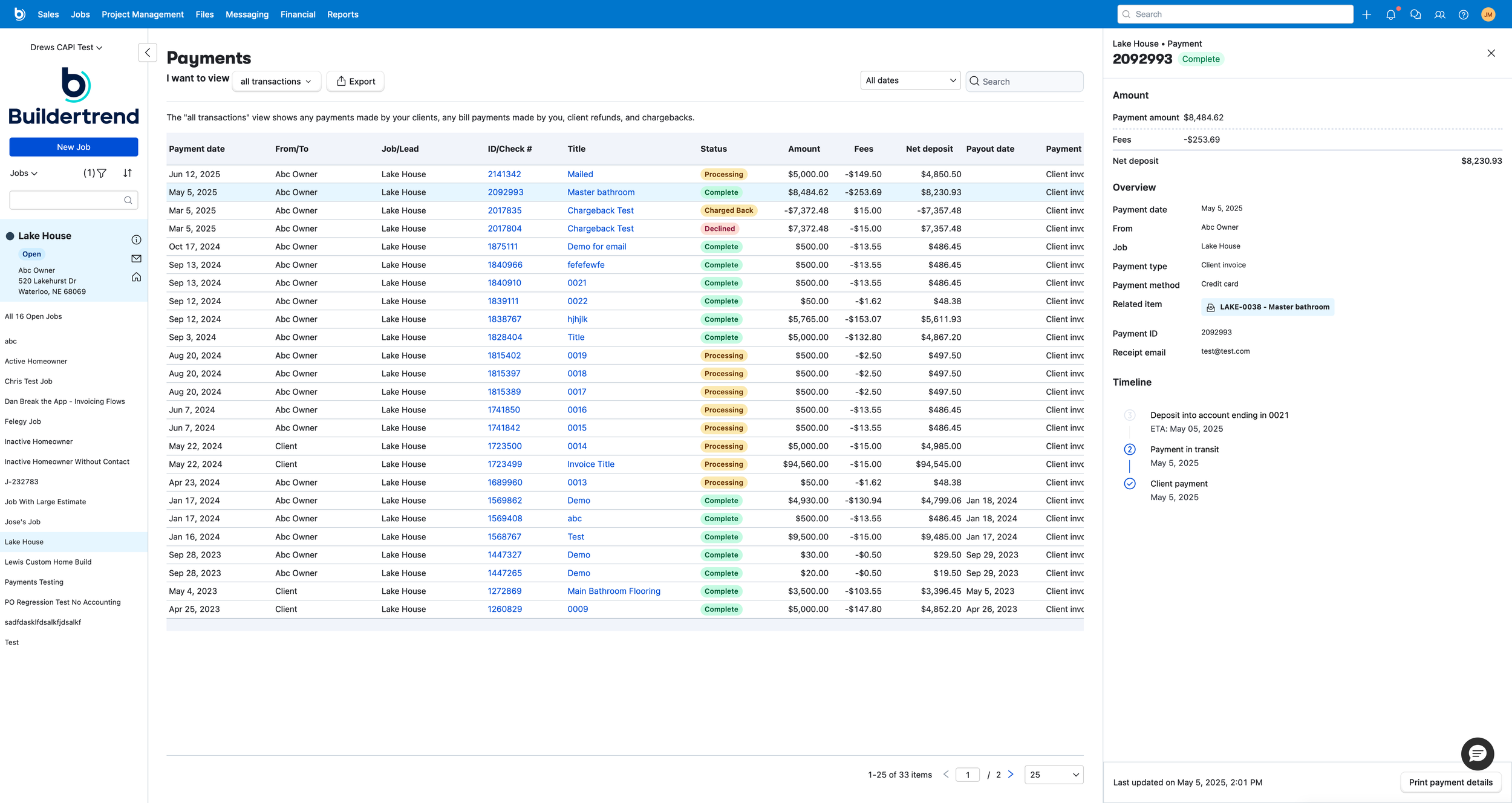
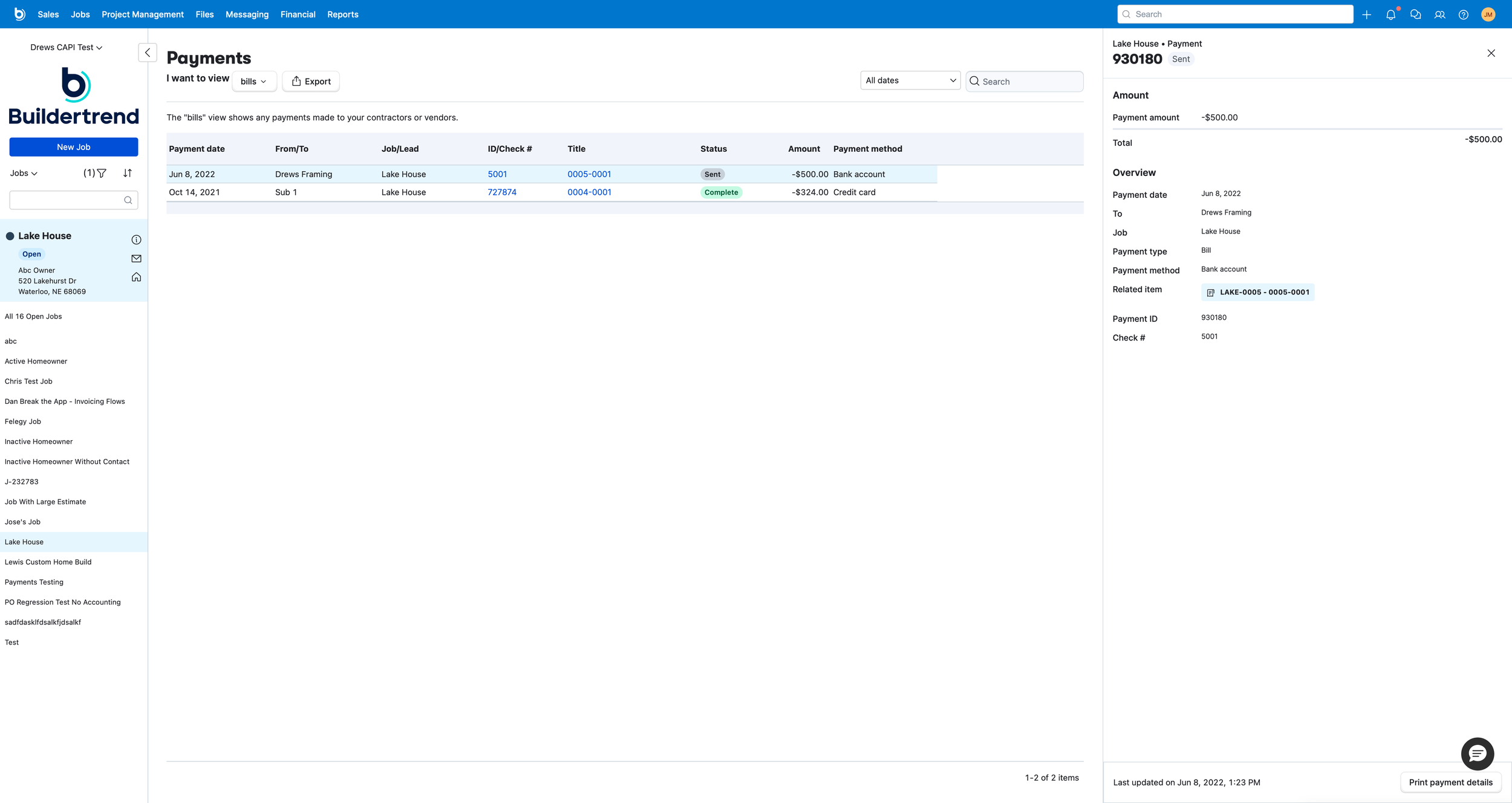
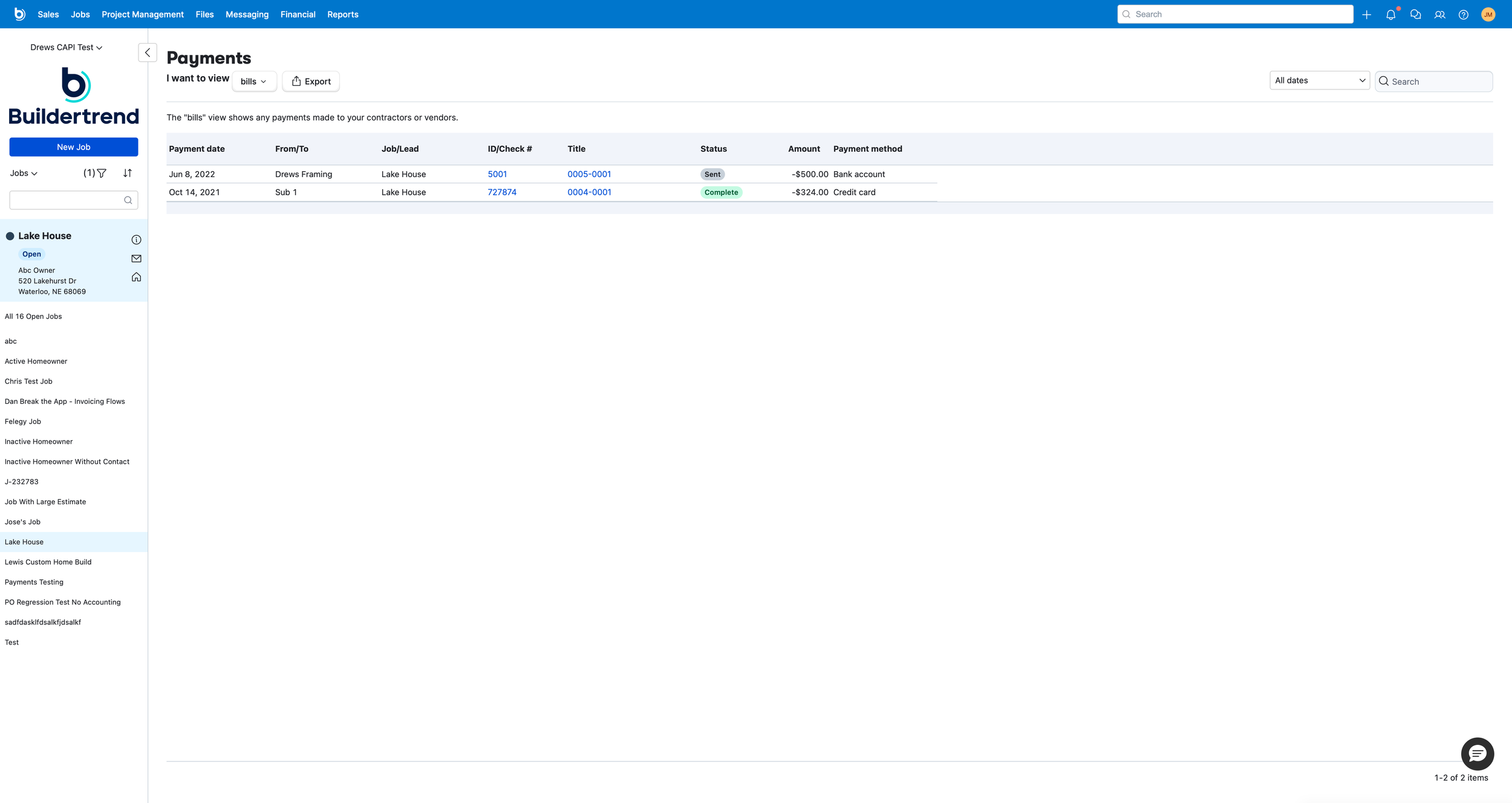
Solution
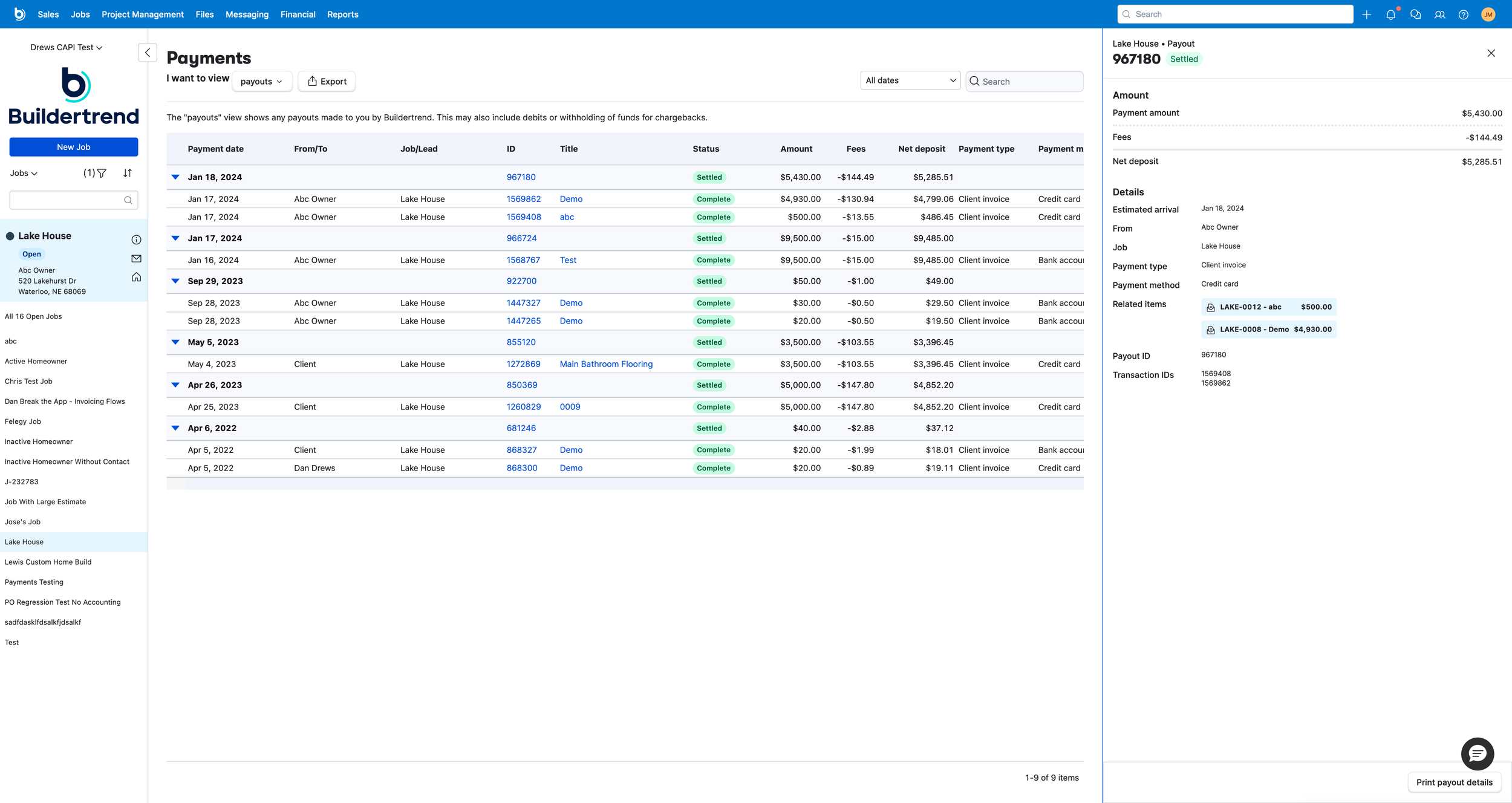
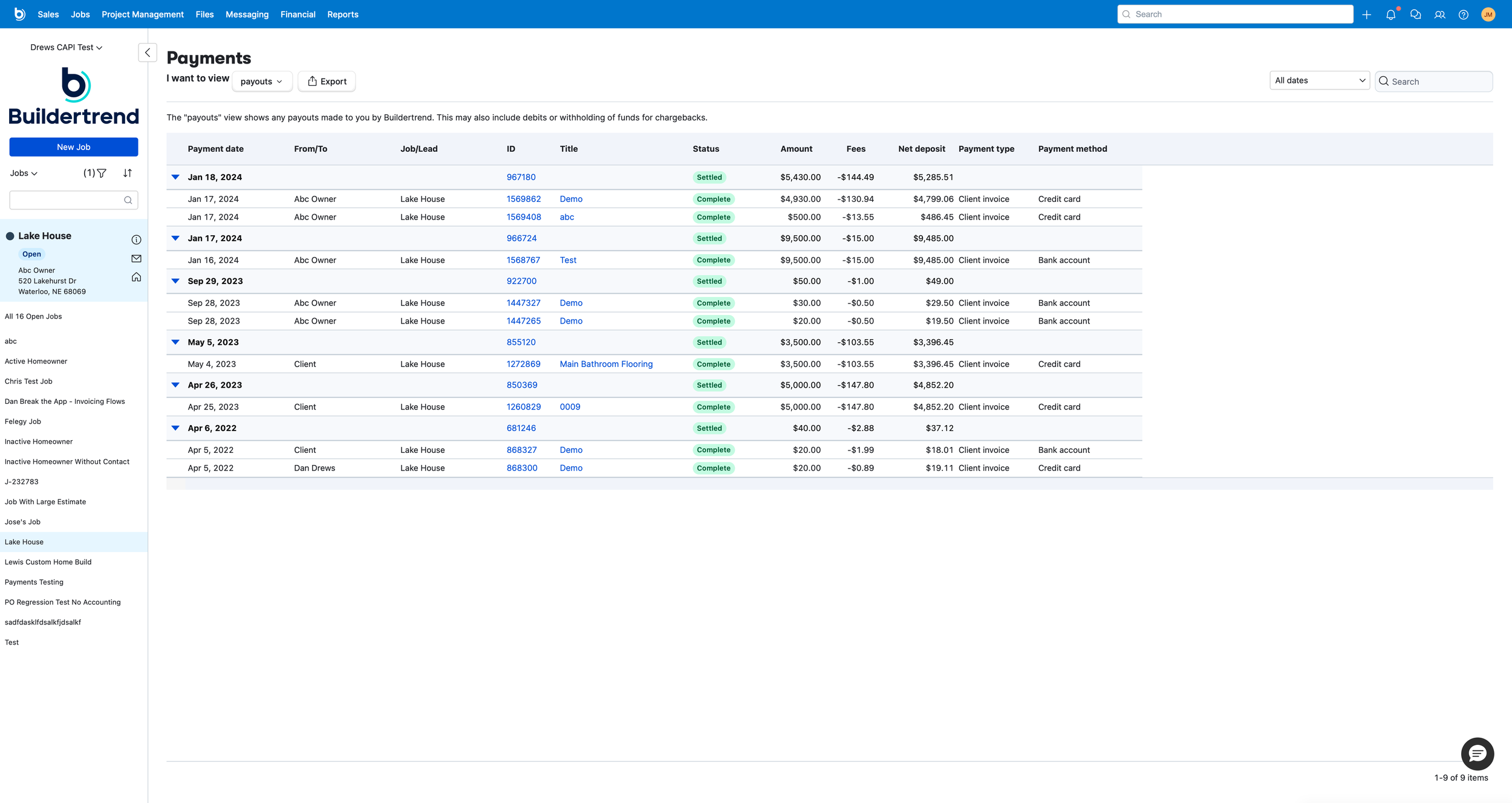
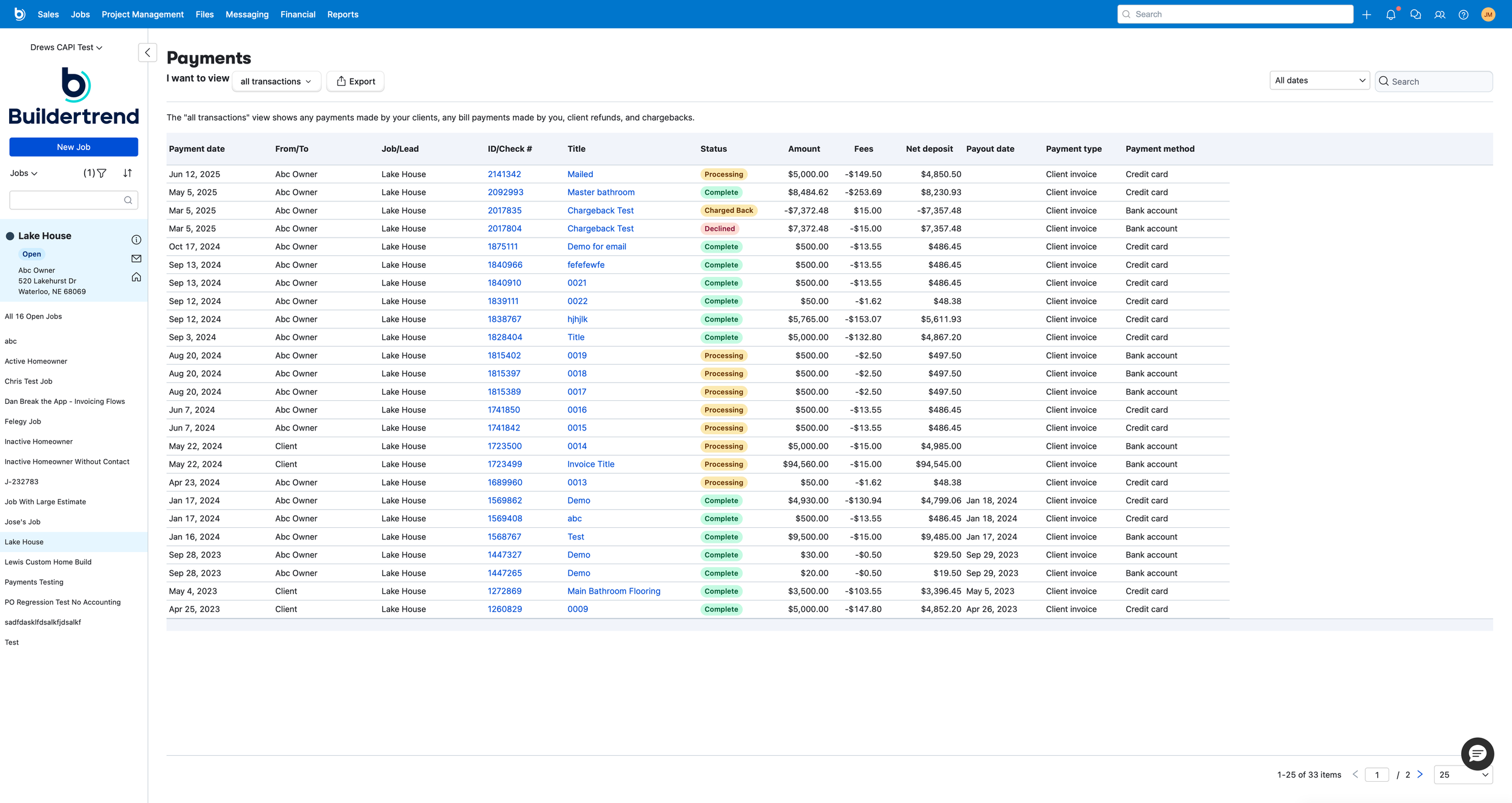
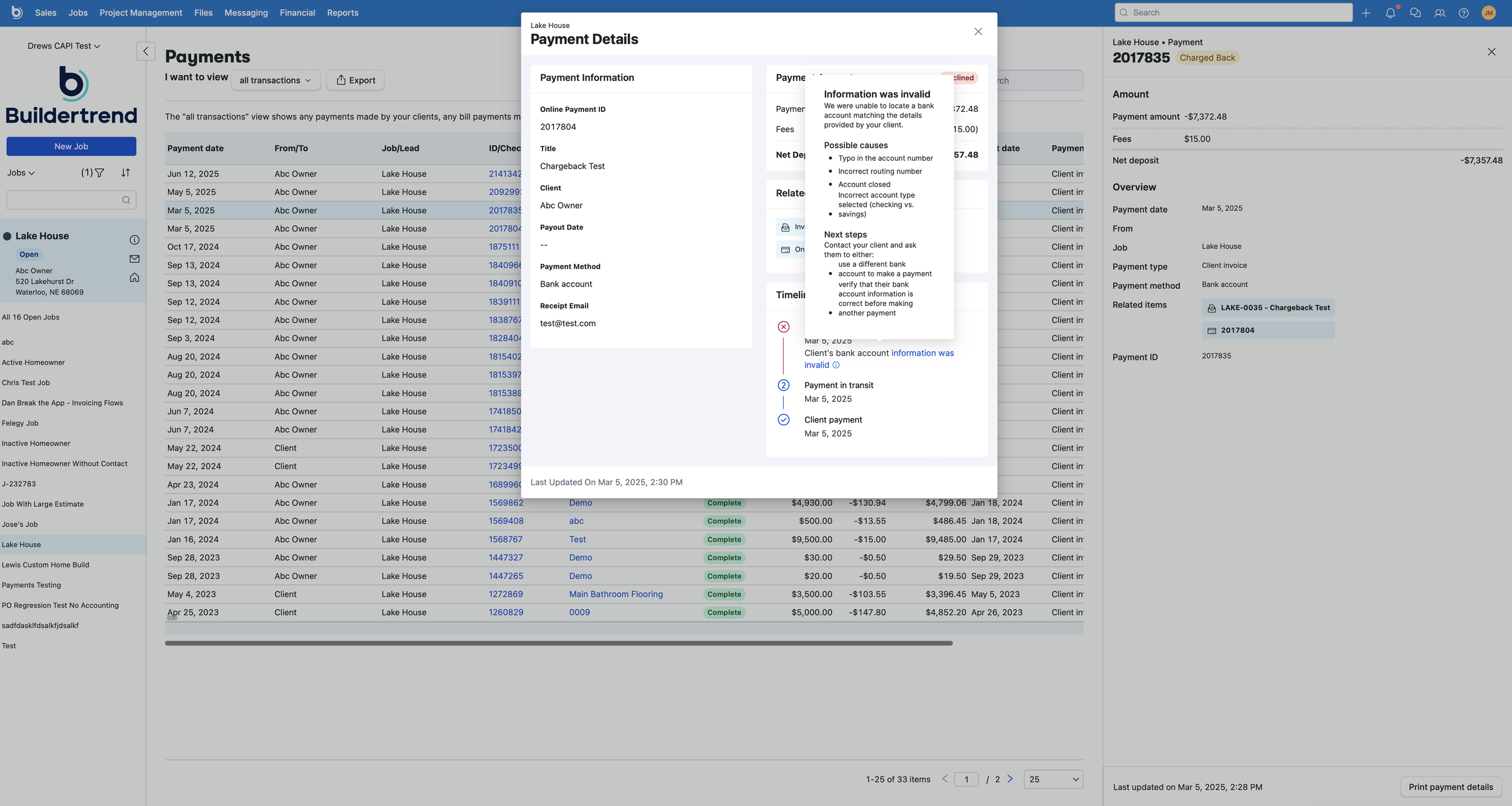
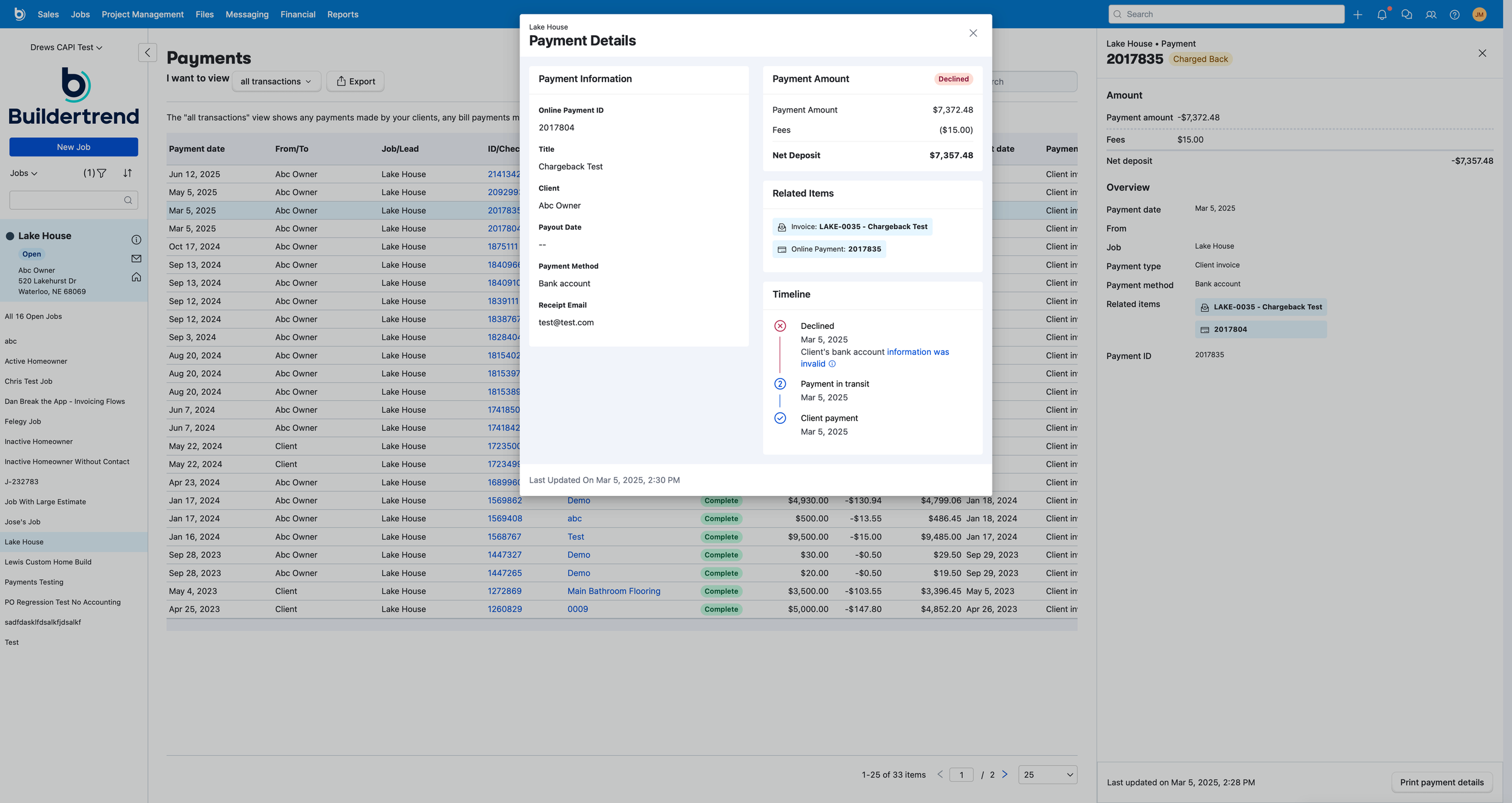
Outcome
Support tickets decreased: Chargeback + status questions reduced.
Improved trust & NPS: Builders no longer felt “in the dark.”
Clearer reconciliation workflows: Bookkeepers resolved questions faster.
Internal Impact
Components reused by other product teams
New side-panel pattern adopted across FinServ
Created a unified payment-lifecycle model for PM + Engineering
Customer Quote
“I can now clearly see what transactions make up my settlement payment.”
– Buildertrend Customer
Reflection
The project required deep alignment across Product, Risk, and Engineering.
Mapping the true payment lifecycle was critical to reducing confusion.
Creating new design-system components made it easier to build future financial products.
Usability testing validated clarity and reduced cognitive load.